Harrow Council permits for roadside flower installations
Posted on 03/10/2026
Harrow Council permits for roadside flower installations: what you need to know before placing flowers near the road
If you're planning roadside flowers in Harrow, the first question is rarely about the blooms. It's about permission. Harrow Council permits for roadside flower installations can affect where you place planters, how visible they are, and whether they create any risk for pedestrians, drivers, or nearby property. That sounds dry, to be fair, but it matters a lot once a display is on a pavement edge, a verge, or near a busy junction.
This guide breaks the topic down in plain English. You'll learn how roadside flower installations are usually assessed, what council permission tends to involve, who needs to think about it carefully, and how to avoid the common mistakes that lead to delays or objections. If you're a florist, venue manager, business owner, community organiser, or simply someone wanting a neat floral frontage, this should help you make a sensible, safe plan.
Let's face it: a roadside display can look charming for about five seconds, and then it becomes a question of sightlines, maintenance, access, and public safety. That's the real world.
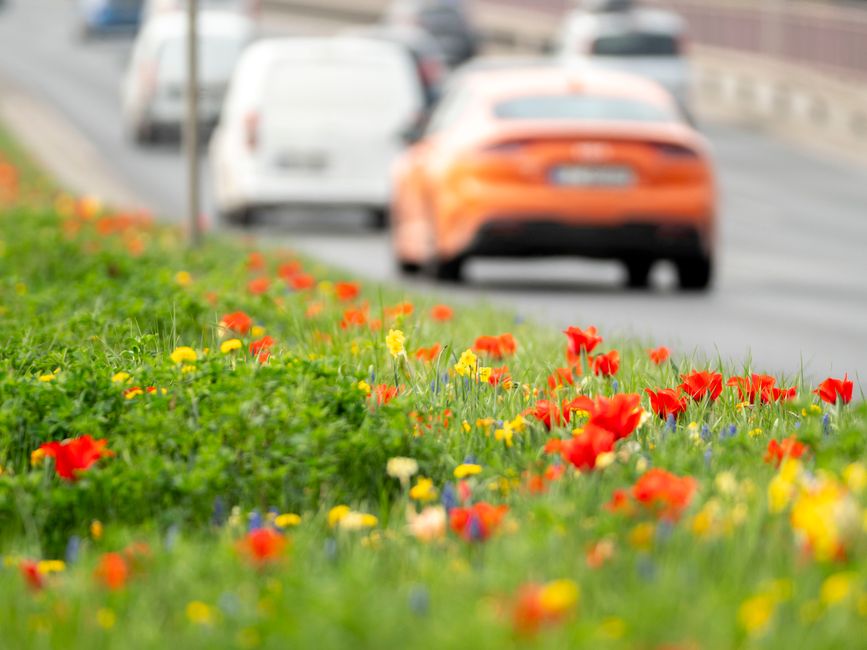
Why Harrow Council permits for roadside flower installations Matters
Roadside flower installations can do a lot for a street. They soften hard edges, signal care, and make a place feel looked after. A tidy planter outside a shop, cafe, church, or community venue can change the mood of a whole frontage. You notice it especially on grey mornings, when the pavement feels a bit stark and the first colour you see is a well-kept floral display.
But roadside placement is not the same as putting flowers in a private garden. Once a display sits near the highway, the council's concerns change. It may affect pedestrian flow, wheelchair access, visibility for traffic, cleaning operations, or maintenance access. In simple terms, the more public the space, the more careful you need to be.
That is why Harrow Council permits for roadside flower installations matter. The permission process helps determine whether the display is suitable, safe, and appropriately managed. Without that step, a lovely idea can become a practical problem. And nobody wants a planter moved, removed, or complained about after the fact.
There is also a reputational angle. A well-presented display that appears organised, stable, and properly approved tends to build trust. A display that looks ad hoc, blocks sightlines, or encroaches on a walkway can have the opposite effect. For businesses in particular, the flower installation becomes part of the customer experience, whether you planned it that way or not.
Expert summary: roadside flowers work best when they are treated as a public-space feature, not just decoration. If you plan for access, visibility, safety, and upkeep from the start, the installation is far more likely to succeed in practice.
How Harrow Council permits for roadside flower installations Works
The exact route will depend on where the flowers are being installed and how much of the public highway is affected. That said, most councils look for the same core information: what you want to install, where it will go, how big it is, how it will be secured, and who will maintain it.
In many cases, the council will want to know whether the installation sits on private land, on the pavement, at the edge of the carriageway, or on a verge. That distinction matters. A display just inside your own boundary is usually much simpler than one that extends onto public land. If it touches the highway, expect a more careful review.
Harrow Council permits for roadside flower installations may involve conditions about size, location, anchoring, sightlines, liability, and the period the display can remain in place. You may be asked to show that the installation will not interfere with pedestrians, bins, street cleaning, emergency access, or vehicle turning. That all sounds obvious until you see a planter half a metre too far into the footway. Then it's not obvious at all.
The council may also expect a basic management plan. Not fancy. Just practical. Who waters the flowers? What happens if a planter is damaged? How quickly will you remove it if asked? These are the kinds of questions that separate a sensible proposal from a hopeful one.
If your display is associated with an event, a business promotion, or a seasonal frontage, timing also matters. A short-term installation can sometimes be treated differently from a semi-permanent one. The same is true for temporary floral features on streets with heavy footfall. A Saturday market scene at 11am is not the same as a quiet residential frontage at dusk, and local decision-making often reflects that reality.
What councils usually look for
- Clear location details and a simple sketch or photo
- Dimensions of the installation and how far it will extend
- Whether it is fixed, weighted, or freestanding
- Evidence that it will not block access or sightlines
- A plan for maintenance and removal
- Any public liability considerations
Key Benefits and Practical Advantages
Done properly, roadside flower installations offer more than visual appeal. They can support local identity, improve perceived care, and create a friendlier approach to a building or street corner. That matters in Harrow, where many frontages blend residential, retail, and community uses. A small display can help a place feel intentional rather than forgotten.
For businesses, flowers can work like a quiet signal. They say the premises are active, presentable, and attentive to detail. Not loud marketing. Just a better first impression. For event organisers, they can frame an entrance, guide visitors, or soften temporary barriers. For community projects, they can make a street feel cared for without needing major infrastructure.
There are also practical advantages to getting permission early. You reduce the risk of complaints, avoid wasted spending, and make it easier to plan materials and labour. If you have ever seen a beautifully arranged roadside display packed away before it had even settled in, you'll know how frustrating that can be. A bit of admin upfront saves a lot of sighing later.
In our experience, the best roadside floral schemes are the ones that feel calm and low-risk. They do not shout for attention. They simply belong there. That's the sweet spot.
- Better public presentation
- Lower risk of removal or enforcement issues
- More confidence for nearby residents and visitors
- Cleaner integration with events or seasonal campaigns
- Improved planning for maintenance and watering
Who This Is For and When It Makes Sense
This topic is not only for florists. Plenty of people end up needing Harrow Council permits for roadside flower installations without thinking of themselves as "street display" planners at all.
You may need to look at permission if you are:
- A florist creating frontage displays for a shop, restaurant, or salon
- A venue manager planning floral decoration near a pavement or access point
- A business owner using planters to improve kerb appeal
- A community group or resident association working on a local beautification project
- An event organiser adding flowers to entrances, barriers, or outdoor walkways
- A wedding or ceremony planner using floral pieces close to a public road
It makes sense to explore permission when the flowers are visible from the road and physically close to the highway edge. It also makes sense if people will walk past them, queue nearby, or if vehicles might need to turn close to them. If your plan involves anything more than a pot tucked safely inside private property, it's worth pausing and checking.
A quick rule of thumb: if you are wondering whether it counts as "just decoration", it probably deserves a proper review. That little nudge of caution can save you time.
Step-by-Step Guidance
If you want the smoothest possible route, treat the process like a small project rather than a quick ask. The steps below are practical, not glamorous, but they work.
1. Define the exact location
Start by identifying whether the installation will sit on private land, public pavement, verge, or another roadside edge. Take photos in daylight. Stand back and look at the approach from a driver's and pedestrian's point of view. If the display is hard to judge from the kerb, a council officer will likely see that too.
2. Measure the footprint
Write down the width, depth, and height. If you are using planters, include any stands, bases, or hanging elements. A floral arch may look elegant in a sketch, but the council will care about the actual clearance it leaves behind.
3. Think about access and movement
Ask a simple question: can a stroller, wheelchair, mobility aid, delivery trolley, or rubbish bin still pass without hassle? If the answer is "maybe", that usually means the design needs tightening. Trust me, the pavement will tell you quickly.
4. Prepare a basic installation note
This does not need to be a long report. A short note can explain the purpose, materials, anchoring method, maintenance schedule, and intended dates. Mention whether the flowers are real, artificial, or a mix. If there are any seasonal swaps, say so.
5. Check whether ownership or consent is needed elsewhere
Sometimes council permission is only one layer. You may also need the landowner's agreement, landlord consent, event approval, or building management approval. No one likes this part, but it is better than assuming one yes covers everything.
6. Submit the request early
Give yourself time. Seasonal displays, weddings, remembrance arrangements, and street beautification projects often come with fixed dates, and last-minute approval requests can create pressure for everyone involved. Early contact keeps options open.
7. Plan for upkeep and removal
Be realistic about watering, deadheading, waste, replacement plants, and weather damage. A display can look fresh on day one and a bit tired by day five if nobody is looking after it. Councils notice that. So do neighbours.
Expert Tips for Better Results
Good roadside floral installations are rarely the most elaborate ones. They are the ones that are easiest to live with. A few small choices make a big difference.
Keep the footprint modest. Smaller, well-placed installations usually perform better than oversized displays that dominate the frontage. A compact arrangement can still look rich if the planting is considered.
Choose sturdy containers. Heavy planters, weighted bases, or low-centre designs help reduce toppling. Wind is not your friend here. Nor is a passing van that sits a little too close.
Use plants that hold up well. For road-facing positions, robust flowers and mixed greenery often last longer than delicate stems. If the site is exposed, choose varieties that can cope with sun, wind, and occasional neglect. Being honest helps here.
Match the display to the setting. A neat, low arrangement may be better outside a residential frontage, while a fuller seasonal display might suit a commercial entrance. One size rarely fits all.
Design for visibility, not clutter. The best floral roadside features feel elegant because they leave space around them. You should still be able to see building signage, crossing points, and approaching traffic clearly.
Take weather into account. Rain, sun, and wind all affect how a display looks after the first day. A display that photographs beautifully at noon may sag by late afternoon in warm weather. That's normal, but it should be planned for.
Build in a maintenance routine. Even a small roadside installation needs a simple check-in schedule. A five-minute inspection can prevent a much bigger issue later.
Practical takeaway: if the design is safe, simple, and easy to maintain, it is much more likely to be approved and stay in place without fuss.
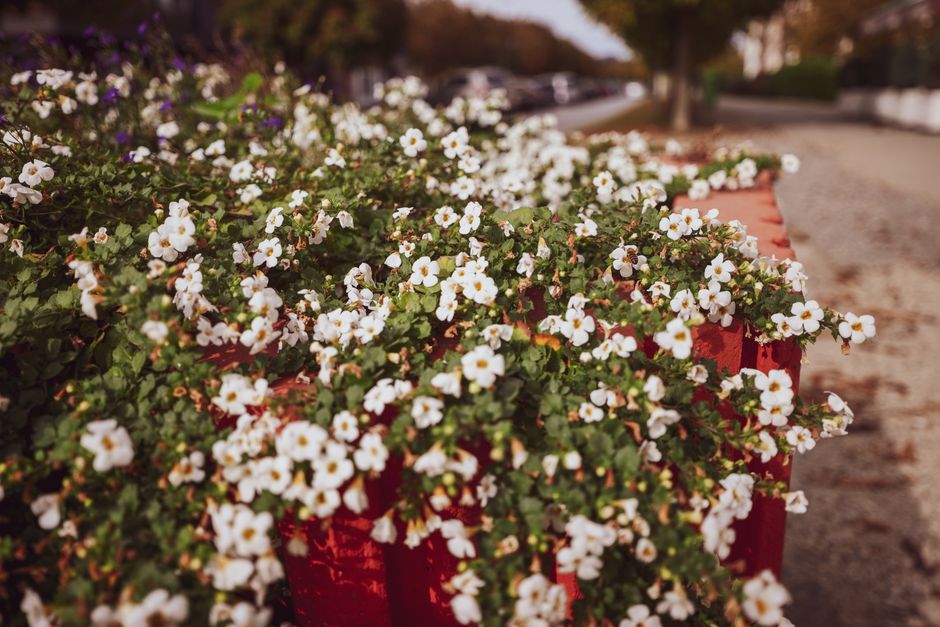
Common Mistakes to Avoid
A lot of avoidable headaches come from small oversights. The installation itself may be lovely. The problem is usually the process around it.
- Assuming a small display needs no permission. Even a modest planter can create an issue if it sits in the wrong place.
- Blocking the pedestrian route. A few centimetres can matter on a narrow pavement.
- Ignoring sightlines near junctions or driveways. Flowers should not create a visual blind spot.
- Skipping maintenance plans. Wilted flowers and toppled containers are not a good look.
- Using light containers that can move in wind. Decorative is fine. Unsafe is not.
- Forgetting to check other permissions. Landlord, event, or property owner consent may also be needed.
- Submitting only a vague idea. "We'd like some flowers by the road" is not enough detail for a sensible decision.
One of the most common problems is overconfidence. People assume the display is obviously harmless because it looks harmless. But roadside use is about how it functions in the real world, not how nice it looks from a few metres away. Slightly annoying, yes. Also sensible.
Tools, Resources and Recommendations
You do not need a huge toolkit to plan a roadside floral installation, but a few basic items and documents make the process much easier.
- Site photos: take wide shots and close-ups so you can show the setting clearly.
- A tape measure: simple, old-fashioned, and still one of the best tools going.
- A rough site sketch: mark the position of planters, kerbs, doorways, and walkways.
- Material notes: list container type, planting medium, and anchoring method.
- Maintenance schedule: even a short weekly routine can help.
- Fallback plan: know what you will do if the council wants the display altered.
If you are working on a wider floral scheme, it can also help to choose flowers that fit the season and the site's light levels. For example, a display of bright mixed blooms may work beautifully in a sheltered spot, while a more restrained arrangement may be better on a windy roadside. Some people like a bold statement; others need something quietly resilient. Both are valid.
For broader floral planning, browsing a range like all flowers or a seasonal edit such as summer flowers can help you think through colour, scale, and durability before you finalise the roadside display. If the installation is part of a special celebration, a more curated selection like florist choice can be a useful starting point.
For displays intended to be seen from a street edge, it is also worth considering how they photograph in daylight and how they feel at ground level. People notice that stuff. They really do.
Law, Compliance, Standards, or Best Practice
Exact legal requirements can vary depending on the location, the type of land involved, and the extent of the installation. Because of that, it is safest to treat roadside flowers as a public-facing feature that may need formal approval rather than assuming they are automatically allowed.
At a practical level, good compliance usually means the following:
- keeping the public right of way clear
- avoiding obstruction of access points and visibility splays
- making sure containers are stable and appropriately weighted
- ensuring the display is maintained so it does not become a hazard
- checking whether fire access, emergency access, or cleaning access could be affected
- removing the installation promptly if required by the council or landowner
Best practice also means thinking about duty of care. If flowers or planters are placed near the road, you are taking responsibility for how they behave in weather, foot traffic, and daily use. That is not a reason to avoid them. It is just the grown-up part of the process.
If you are unsure, ask early and keep your proposal simple. Councils generally prefer clear, safety-led requests over overcomplicated ideas. A neat concept with a clean maintenance plan is usually more persuasive than a flashy one with no practical backbone.
Options, Methods, or Comparison Table
There are several ways to introduce flowers near a road, and the best choice depends on how public the site is, how long you need the display to last, and how much maintenance you can realistically commit to.
| Option | Best for | Pros | Watch-outs |
|---|---|---|---|
| Freestanding planters | Shopfronts, entrances, short-term decoration | Flexible, easy to move, visually effective | Can tip, obstruct, or be moved by wind if not weighted |
| Fixed roadside planting | Longer-term public-facing schemes | Stable, tidy, often looks integrated | Usually needs more careful permissions and planning |
| Event-based floral features | Weddings, launches, ceremonies, seasonal events | High visual impact for a short period | Timing and access management become very important |
| Private boundary display | Front gardens, private forecourts, low-risk frontage decoration | Easier to manage if fully within private land | Still needs checking if it appears close to the highway |
If you are choosing between options, ask yourself one blunt question: what is the least complicated way to achieve the look you want? That question saves a lot of decorative ambition from turning into paperwork.
Case Study or Real-World Example
Imagine a small independent florist near a busy Harrow road wanting to brighten the frontage for spring. The team would like several planters outside the shop, with mixed pastel blooms and a couple of low arrangements near the entrance. The idea is simple enough, but the pavement is narrow and delivery drivers already use the kerb space at peak times.
Instead of placing the containers first and worrying later, the florist measures the full width of the usable pavement, marks the door swing, checks visibility from both directions, and creates a basic layout showing where each planter will sit. They decide to keep the displays low, weight the containers, and leave a clear line for passers-by. They also plan for daily watering and a weekly tidy-up.
That small bit of planning changes everything. The display still feels welcoming, but it now looks deliberate rather than improvised. Neighbours are less likely to complain. Customers can walk in without weaving. The shopfront looks cared for. Not dramatic. Just right.
The real lesson? The most successful roadside floral schemes are usually the most boring in the planning stage. That is not a bad thing. It's the reason they keep working after the first week.
Practical Checklist
Use this checklist before you move ahead with a roadside installation.
- Have you confirmed whether the flowers will sit on private land or public highway space?
- Have you measured the proposed footprint accurately?
- Can pedestrians, wheelchairs, pushchairs, and delivery trolleys pass comfortably?
- Have you checked visibility for drivers and nearby crossings?
- Do you know who will water, tidy, and inspect the display?
- Are the planters stable, weighted, and appropriate for the weather?
- Have you checked whether landowner, landlord, or event permission is also needed?
- Have you prepared photos, a sketch, and a short installation note?
- Is there a removal plan if the council requests changes?
- Have you allowed enough time for review before your desired launch date?
If you can tick those boxes without hesitation, you are already in much better shape than most rushed proposals. Small pause here. That is genuinely half the battle.
Conclusion
Harrow Council permits for roadside flower installations are really about balance: beauty on one side, safety and access on the other. When the display is planned properly, the result can be warm, memorable, and genuinely good for the street. When it is not, even the prettiest flowers can become a nuisance. A little structure up front makes a huge difference.
The safest approach is simple. Define the site clearly, keep the design modest and stable, prepare for maintenance, and check permission before you spend time and money on the installation. That way you are not guessing, and neither is the council.
If you are creating a floral frontage for a shop, venue, community project, or special event, the smartest next step is to gather your measurements, photos, and timeline, then make the request as clear as you can. It does not have to be complicated. It just has to be thoughtful.
Get a free quote today and see how much you can save.
And if you do take it forward, do it with care. The best roadside flowers are the ones that make a place feel a little kinder on an ordinary day.
Frequently Asked Questions
Do I always need Harrow Council permission for roadside flower installations?
Not always, but if the flowers are close to or on public highway space, permission or approval is often worth checking first. The safest assumption is that anything affecting a pavement, verge, or roadside access point should be reviewed.
What counts as a roadside flower installation?
It can include planters, floral arrangements, decorative tubs, entrance displays, temporary event flowers, and other decorative features placed near the road. If it is visible from the street and could affect access or safety, it may count.
Can I put flower planters on the pavement outside my business?
Only if you have confirmed that the placement is allowed and that it will not obstruct pedestrians or access. The pavement is public space, so even a small planter can need approval depending on the exact location.
How far from the kerb should flower displays be placed?
There is no one-size-fits-all answer. The right distance depends on pavement width, traffic conditions, access needs, and the size of the display. The key is to leave a clear, safe route for people to pass.
What information should I include in a permit request?
Include the location, size, photos, a simple sketch, how the display will be secured, how it will be maintained, and how long it will stay in place. Clear, practical information usually helps more than a long explanation.
Are temporary floral displays easier to approve than permanent ones?
Often, yes, because temporary displays can be easier to assess and manage. But short-term does not automatically mean low-risk. If a temporary installation affects access or visibility, it still needs to be considered carefully.
What are the biggest reasons roadside flower installations get refused?
The most common problems are obstruction, poor visibility, unstable containers, lack of maintenance planning, and unclear ownership or consent. In short, anything that creates doubt about safety or responsibility can make approval harder.
Can I use artificial flowers for a roadside display?
Yes, sometimes, but that depends on the setting and the council's expectations. Artificial flowers can last longer and need less watering, though they still need to be stable, tidy, and appropriate for the environment.
Do I need a florist, or can I do it myself?
You can often plan a small installation yourself if you are confident with the layout and upkeep. A florist can help with design, flower choice, and presentation, especially if the display is for a business or event and needs to look polished.
How long does approval usually take?
That can vary, so it is best not to leave it to the last minute. Simpler proposals are usually quicker to review than more complex roadside schemes. Build in extra time if your installation is linked to a fixed event date.
What should I do if the council asks me to move the display?
Respond quickly and calmly. In most cases, a small adjustment to the position, size, or setup can resolve the issue. Having a flexible plan from the start makes this much easier.
Are roadside flower installations worth it for small businesses?
Often, yes, if they are done safely and kept tidy. A modest floral display can improve first impressions and make a frontage feel more inviting. The trick is to keep it practical, not overdone.
Can roadside flowers be used for weddings or special events in Harrow?
Yes, they can be lovely for weddings and other celebrations, especially near entrances or procession routes. Just make sure the display is planned with access, timing, and permissions in mind so the day stays smooth.
What is the best first step if I am unsure whether I need permission?
Start by documenting the exact location with photos and measurements, then assess whether the installation touches public space or could affect access. If there is any doubt, it is wiser to check before ordering or installing anything.